Understanding how a reverse mortgage works is the first step. Understanding whether it makes sense for your situation is the harder one. Most people who run into trouble with these loans didn’t make a reckless decision. They made a decision without the full picture. This guide gives you the complete version.
Find a Reverse Mortgage Specialist Near You →Last updated: September 2026
How Does a Reverse Mortgage Work: The Core Concept
What You’ll Learn in This Guide
- What a reverse mortgage is and how it differs from a regular mortgage
- How you receive the money: lump sum, monthly payments, or line of credit
- What it costs, upfront and over time
- Who qualifies and what HUD requires
- The real downsides, including risks most people never hear about
- When a reverse mortgage makes sense, and when it doesn’t
- The questions to ask a specialist before you apply
How does a reverse mortgage work, and is it right for you? That is the two-part question this guide is built to answer. The TV commercials make it sound simple. The critics make it sound like a trap. The reality lands somewhere more specific than either version.
If you’ve been exploring retirement income options and wondering whether the equity in your home could be part of the plan, you’re asking the right question. The answer depends on a few things: how long you plan to stay in your home, what your other income sources look like, and whether your heirs have a stake in what happens to the property. We’ll cover all of it.
For a broader look at retirement financial planning, including Social Security timing and retirement income sequencing, see our Financial Planning for Retirement guide.
A reverse mortgage is a loan that allows homeowners age 62 or older to borrow against the equity they’ve built in their home. Unlike a traditional mortgage (where you make monthly payments to a lender), a reverse mortgage works the opposite way: the lender advances money to you, and the loan balance grows over time as interest accumulates.
The loan doesn’t have to be repaid until one of the following events occurs:
- You sell the home
- You permanently move out (into a care facility, for example)
- You pass away
- You fail to meet loan obligations (property taxes, insurance, maintenance)
At that point, the home is typically sold to repay the loan balance, including principal, accumulated interest, and fees. If the home sells for more than the loan balance, the remaining equity goes to you or your heirs. If the home sells for less, the Federal Housing Administration (FHA) insurance covers the shortfall. You and your heirs are not personally liable for the difference.
The Most Common Type: HECM Loans
To see how a reverse mortgage works in practice, start with the most common type: the Home Equity Conversion Mortgage (HECM), a federally insured program backed by the U.S. Department of Housing and Urban Development (HUD). Because HECMs are government-backed, they carry consumer protections and fee caps that private reverse mortgages don’t always offer.
HECM (FHA-Insured)
- Government backed by FHA
- Loan limit: Up to $1,249,125 (2026, per HUD Mortgagee Letter 2025-22)
- Mandatory HUD-approved counseling required before applying
- Best for most homeowners with standard home values
- Strong, federally regulated consumer protections
Proprietary Reverse Mortgage
- Private lender only, not government backed
- Loan limit: Higher limits available
- Counseling not always required
- Best for high-value homes above HECM limits
- Consumer protections vary by lender
For most homeowners, a HECM is the right starting point. Proprietary (private) reverse mortgages can make sense for high-value properties, but they require extra scrutiny since they carry fewer regulatory protections.
How Do You Receive the Money?
One of the most misunderstood aspects of reverse mortgages is the flexibility in how you receive the loan proceeds. You have several options:
Lump Sum
Receive all available funds at closing. Fixed interest rate applies.
Best for: Paying off an existing mortgage or covering a large one-time expense.
Monthly Payments (Tenure)
Fixed monthly payments for as long as you live in the home.
Best for: Supplementing monthly income over the long term.
Monthly Payments (Term)
Fixed monthly payments for a set number of years.
Best for: Bridging a specific income gap, such as before Social Security begins.
Line of Credit
Draw funds as needed. The unused portion grows over time at the same rate as the loan’s interest rate.
Best for: Emergency reserve or flexible spending. This is the most commonly chosen option.
Combination
A mix of monthly payments and a line of credit.
Best for: Income supplement with a safety net reserve kept in reserve.
What Does a Reverse Mortgage Cost?
Reverse mortgages are not cheap. Understanding the full cost picture is one of the most critical steps when evaluating how a reverse mortgage works for your specific financial situation. The fees below are based on HECM program rules as documented by the Consumer Financial Protection Bureau:
| Cost | Amount and Notes |
|---|---|
| Origination Fee | $6,000 or less, paid to the lender, based on home value |
| Upfront MIP (Mortgage Insurance Premium) | 2% of home value, required for HECMs, protects you if the lender fails. |
| Annual MIP | 0.5% of loan balance per year, added to loan balance |
| Closing Costs | Paid to third parties; per the CFPB, these can include an appraisal, title search, surveys, inspections, recording fees, and other standard fees |
| Interest Rate | Variable or fixed; rates track market indexes and vary by lender. Per current HECM rate data, recent rates have ranged from approximately 6.5–8%, depending on loan type and market conditions. Accrues on the growing loan balance over time. |
| Servicing Fee | Up to $35/month, added to loan balance |
Most of these costs can be rolled into the loan, meaning you don’t pay them out of pocket at closing. But rolling costs into the loan means your starting balance is higher and grows faster, leaving less equity for you or your heirs over time.
Who Qualifies for a Reverse Mortgage?
According to the Consumer Financial Protection Bureau, to qualify for a HECM reverse mortgage you must meet all of the following requirements:
- Age: At least 62 years old. All borrowers listed on the title must meet this requirement.
- Primary residence: The home must be your primary residence, meaning you live there the majority of the year.
- Home type: Single-family home, FHA-approved condo, or manufactured home built after June 1976.
- Ownership: You must own the home outright or have a low enough mortgage balance that it can be paid off at closing using reverse mortgage proceeds.
- No federal debt: You cannot owe any federal debt, such as federal income taxes or federal student loans. You may use reverse mortgage proceeds to pay off this debt at closing.
- Property charges: You must have enough funds, or agree to set aside part of the loan proceeds, to cover ongoing property taxes, insurance, and maintenance costs.
- Home condition: The home must meet required property standards. If it does not, the lender will specify what repairs are needed before you can proceed.
- HUD counseling: You must complete a session with a HUD-approved reverse mortgage counselor before applying. This is mandatory and a real consumer protection, not a formality.
Reverse Mortgage Pros and Cons
No financial tool is right for everyone. Here’s a clear-eyed look at both sides:
✓ Potential Advantages
- Tax-free proceeds (loan advances are not considered income)
- No monthly mortgage payments required
- You keep ownership and continue living in your home
- Non-recourse loan: you’ll never owe more than the home is worth
- Line of credit grows over time if unused
- Can eliminate an existing monthly mortgage payment
- Flexible payout options to match your needs
- FHA insurance protects you if the lender fails
✗ Potential Disadvantages
- High upfront costs compared to other loan types
- Loan balance grows over time, reducing remaining equity
- Heirs face a limited window to repay or sell after death
- Property taxes, insurance, and maintenance remain your responsibility
- Affects Medicaid eligibility if cash is not spent in the same month received
- Complicates estate planning and inheritance
- Moving out for 12 or more consecutive months triggers repayment
- Spouses under 62 can face serious complications if not listed on the loan
The Non-Borrowing Spouse Issue
This is one of the most important and most overlooked risks with reverse mortgages. If one spouse is under 62 and not listed as a borrower, that spouse faces real vulnerability if the borrowing spouse dies or moves into a care facility.
HUD rules introduced in 2014 provide some protections for eligible non-borrowing spouses, allowing them to remain in the home after the borrower’s death without triggering immediate repayment. However, the non-borrowing spouse cannot receive any additional loan proceeds, and specific conditions must be met to qualify for this protection.
If you and your spouse have a significant age difference, this issue deserves a detailed conversation with a reverse mortgage specialist and an estate planning attorney before you proceed.
When Does a Reverse Mortgage Make Sense?
Knowing how a reverse mortgage works is only half the equation. The other half is knowing when it’s the right choice for your situation.
A reverse mortgage tends to work best in these circumstances:
- You plan to stay in your home long-term. The high upfront costs only make financial sense if you’re in the home long enough to benefit from the proceeds. Staying fewer than five years rarely pencils out.
- You need to eliminate a monthly mortgage payment. Using a reverse mortgage to pay off an existing mortgage can free up significant monthly cash flow immediately.
- You want a growing line of credit as a safety net. The line of credit option is a powerful tool for funding unexpected healthcare costs or long-term care expenses down the road.
- Your heirs don’t depend on inheriting the home. If leaving the property to your children is not a priority, a reverse mortgage frees you to use your equity now.
- Other income sources are limited. For retirees with significant home equity but limited retirement savings or Social Security income, a reverse mortgage can bridge a real gap.
Here’s what that looks like from the other side of the decision: the monthly mortgage payment that you were still planning to make disappears from your budget. That’s money that can cover prescriptions, property taxes, a home modification that keeps you out of assisted living, or just a cushion that lets you sleep better at night. Many people describe a reverse mortgage not as “getting money” but as “removing pressure.” That’s the outcome worth keeping in mind.
Alternatives to Consider First
Once you understand how a reverse mortgage works, it’s worth comparing it carefully against the alternatives before making any decision.
| Alternative | How It Works and Key Trade-off |
|---|---|
| Home Equity Loan | Lump sum loan against equity with fixed monthly payments. Total costs are lower than a reverse mortgage, but monthly payments are required. |
| HELOC | Revolving line of credit against equity. Flexible access to funds, though lenders can freeze it in certain circumstances. |
| Downsizing | Sell the home, buy smaller, and access equity as cash. A major life change, but a clean break with no ongoing loan balance. |
| Delayed Social Security | Wait to claim Social Security to increase your monthly benefit. Higher lifetime income, but requires an income bridge in the interim. |
| Renting a Room | Generate rental income from your existing home. No equity touched, though it requires a lifestyle adjustment. |
Questions to Ask Before You Apply
Understanding how a reverse mortgage works in theory is useful. Running it against your actual situation is what tells you whether it fits. Before meeting with a lender, work through these questions:
- How long do I realistically plan to stay in this home?
- Do I need the money now, or am I building a safety net for future needs?
- What is my existing mortgage balance, and how much equity do I have?
- Is my spouse under 62, and have we addressed the non-borrowing spouse risk?
- Do I anticipate needing Medicaid in the next few years?
- Am I confident I can continue covering property taxes, insurance, and maintenance?
- Have I talked with an estate planning attorney about how this affects my heirs?
- Have I completed the required HUD-approved counseling session?
A reverse mortgage specialist can walk you through a personalized calculation at no obligation. That analysis tells you how much you’d qualify for, what your payout options look like, and what the true cost would be over time. Walking away without that information means making a major financial decision in the dark.
Bring Real Numbers to the Conversation
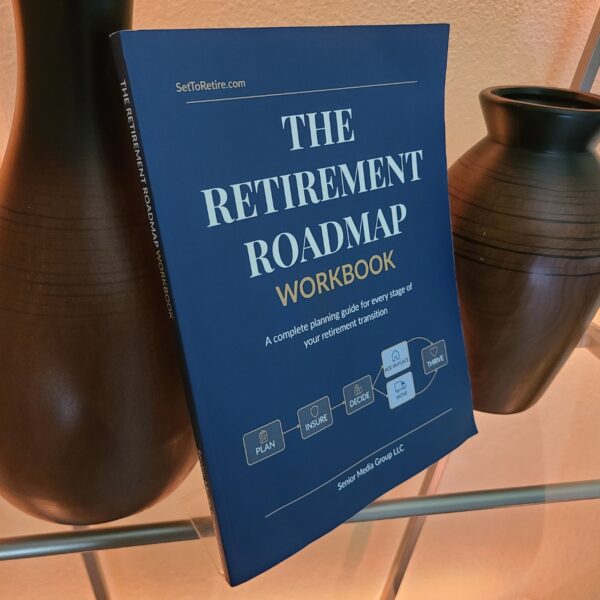
The Retirement Roadmap Workbook includes a Reverse Mortgage Decision Worksheet with space for your actual numbers, a Does/Does Not fit comparison, and a full page of questions to ask a specialist, with room to write down what they tell you.
See the Workbook → $47 · 138 pages · softcover
Frequently Asked Questions About Reverse Mortgages
How much money can you get from a reverse mortgage?
The amount depends on three factors: your age, your home’s appraised value, and current interest rates. HUD uses a “principal limit factor” (PLF) to set the maximum percentage of your home’s value you can access. As an illustration: a 62-year-old borrower with a $500,000 home and an expected interest rate of approximately 7.25% might qualify for around $150,000 in available funds. After upfront fees (origination costs, mortgage insurance, and closing costs), the net amount available at closing would be somewhat less. Your actual numbers depend on your specific situation and current rates.
The older you are and the lower the prevailing rate, the higher your percentage. HUD provides a free HECM calculator at hud.gov where you can run your own numbers before talking to any lender. Understanding how a reverse mortgage works from a numbers perspective starts there.
How does a reverse mortgage work when you die?
When you pass away, the loan becomes due. Per CFPB guidance on HECM repayment, your heirs typically have six months, with possible extensions up to 12 months total, to decide what to do with the property. They can sell the home and repay the loan, keeping any remaining equity. They can pay off the loan balance with other funds and keep the home. Or they can allow the lender to sell the home if they choose not to act. Heirs are never personally liable for any amount exceeding the home’s sale value. That’s the FHA non-recourse protection built into HECM loans.
The most important thing you can do now is make sure your family knows where the loan documents are, who the servicer is, and what the timeline looks like. Most heir complications come from being caught off guard, not from the rules themselves.
Can you lose your home with a reverse mortgage?
Yes, and this is the risk most people underestimate. You can lose your home if you fall behind on property taxes, let homeowner’s insurance lapse, or fail to maintain the property in reasonable condition. These obligations don’t disappear with a reverse mortgage. They’re a condition of the loan. Falling behind on property taxes is the most common reason reverse mortgage borrowers face foreclosure. Before taking one out, assess whether you can reliably cover these costs for the foreseeable future, and whether your income situation is stable enough to sustain that.
What is the 95% rule for a reverse mortgage?
The 95% rule is an FHA non-recourse protection built into HECM loans. It applies when your heirs want to keep the home after your death but the loan balance has grown beyond the home’s current value. Rather than paying the full loan balance, your heirs can satisfy the entire debt by paying 95% of the current appraised value. For example: if the home is worth $300,000 but the loan balance is $350,000, your heirs can settle the debt for $285,000 (95% of $300,000) and the FHA insurance covers the remaining $65,000. It’s a meaningful protection that often gets lost in conversations about what happens at death, but worth knowing before you sign.
Does a reverse mortgage affect Social Security or Medicare?
Reverse mortgage proceeds do not count as income and do not affect Social Security or Medicare benefits. However, they can affect Medicaid eligibility. If you receive reverse mortgage funds and don’t spend them in the same calendar month, the remaining cash may count as an asset and could push you over Medicaid’s asset limits. If Medicaid eligibility is a concern now or in the near future, talk to an elder law attorney before you proceed with a reverse mortgage.
Continue Reading
Content on SetToRetire.com is researched and drafted with AI assistance, then reviewed and edited for accuracy by the editorial team at Senior Media Group LLC. It is provided for general informational purposes only and does not constitute medical, legal, or financial advice. Consult a qualified financial or tax professional before making decisions. For more on how we create content, see our Editorial Process.