

Estate planning for seniors involves more than a will. This guide covers the five documents every family needs, what each one costs, and how to find qualified help near you.
Six months from now, the documents could be signed, your family informed, and the weight of “what would happen if” lifted. That outcome is closer than it feels. This guide is how you get there.
📋 Free Download: Estate Planning Checklist: 10 Documents Every Senior Needs
Enter your email and we’ll send the full checklist to your inbox instantly.
Last updated: September 2026
Why Estate Planning Matters More After 60
Most people know they should have a will. But estate planning after 60 goes well beyond a single document. As you approach or enter retirement, your financial situation, healthcare needs, and family dynamics all grow more complex, and the stakes for getting your paperwork right go up significantly.
If you become incapacitated without the right documents in place, your family may face court proceedings, delayed access to accounts, and difficult medical decisions without your guidance. If you die without a will, state law, not your wishes, decides who gets what. And if your beneficiary designations on retirement accounts haven’t been updated in years, the wrong person may inherit assets regardless of what your will says.
The good news: getting everything in place is manageable, typically takes a few weeks with a qualified attorney, and costs a fraction of what your family would face settling an unprepared estate. According to research from Trust & Will and SmartAsset, the average probate proceeding runs six months to two years and costs 3 to 10 percent of the gross estate value in attorney and court fees. On a $400,000 estate, that’s $12,000 to $28,000, with assets frozen the entire time. A complete estate plan runs $2,000 to $5,000. The math isn’t close.
Estate planning for seniors requires five core documents: a will, a living trust (if applicable), a durable power of attorney for finances, a medical power of attorney, and a directive to physicians. Getting all five in place typically takes a few weeks with a local attorney. Waiting costs far more, in probate fees, delayed access, and decisions made by people who don’t know your wishes.
Estate Planning for Seniors: The 5 Critical Documents
The foundation of estate planning for seniors comes down to five core documents. Most families benefit from having all five in place before any health event forces the conversation.
1. Last Will and Testament
Specifies who inherits your property, who cares for dependents, and who serves as executor. Without one, state law decides, not you. A will must go through probate, which is public and can take months depending on your state.
2. Revocable Living Trust
Transfers assets directly to beneficiaries without probate. Keeps your affairs private (unlike a will, a trust doesn’t become public record). Particularly valuable for those with real estate, significant assets, or blended families.
3. Durable Power of Attorney
Authorizes a trusted person to manage your finances if you become incapacitated. Without it, your family may need a court order just to pay your bills or access your accounts. “Durable” means it stays in effect even if you lose mental capacity.
4. Medical Power of Attorney
Designates someone to make healthcare decisions on your behalf if you can’t speak for yourself. This is separate from your financial POA, and you may want a different person in each role depending on your family situation.
5. Directive to Physicians
States your wishes on life-sustaining treatment, resuscitation, and end-of-life care. Also called a living will or advance directive. Having this on file removes the burden of guessing from your family at the most difficult moment.
Will vs. Living Trust: Most Seniors Need Both
The most common question in estate planning is whether to get a will or a living trust. The honest answer for most families: both. A living trust handles your major assets and avoids probate, while a “pour-over will” catches anything not transferred into the trust before your death. They work together, not in competition. For the full side-by-side comparison and how to decide which fits your situation, read our complete guide: Will vs Living Trust: 6 Critical Questions Before You Decide.
Durable Power of Attorney: What to Know
Your agent can pay bills, file taxes, manage investments, and buy or sell real estate on your behalf. Most states require a durable power of attorney to be signed before a notary public and witnesses, and the document must include specific statutory language to be recognized by financial institutions.
Requirements vary significantly by state, which is exactly why a local attorney matters. Documents drafted in one state may not be fully valid in another, and a financial institution can refuse to honor an improperly executed POA even if your intentions are clear.
What Does Estate Planning for Seniors Actually Cost?
Getting these documents in place is more affordable than most families expect, and significantly less expensive than the alternative of doing nothing. Attorney fee ranges below are based on 2025 data from the National Council on Aging (NCOA). Online platform pricing is based on published rates from Trust & Will.
Basic Package
Will, durable power of attorney, healthcare directive
$500 to $1,500
Varies by location and attorney. Suitable for straightforward situations.
Complete Estate Plan
Living trust, pour-over will, all POAs, healthcare directives, trust funding
$2,000 to $5,000
Recommended for those with real estate, significant assets, or blended families.
Online Platforms
State-specific documents via Trust & Will or similar services
$199 to $499
Trust & Will’s individual will starts at $199; an individual trust plan is $499. Reasonable for simple situations. One attorney consultation is still recommended.
To put those numbers in context: according to research from Trust & Will and SmartAsset, the average probate proceeding costs 3 to 10 percent of the gross estate value in attorney and court fees and ties up assets for six months to two years. On a $400,000 estate, that’s $12,000 to $28,000 in fees, while your family waits. A complete estate plan running $3,000 pays for itself many times over before the first day of probate.
If cost is a genuine concern, ask attorneys about payment plans, check your local bar association’s reduced-fee referral program, and consider starting with a will and durable power of attorney while you save toward a full plan. An incomplete plan is still far better than none.
The Biggest Mistakes Seniors Make With Estate Planning
Most estate planning problems don’t come from the documents themselves. They come from these four patterns, each of which is avoidable with a little advance planning.
-
Waiting until a health event forces the conversation. A durable power of attorney can only be signed while you still have legal mental capacity. If dementia, a stroke, or another condition arrives before that document is in place, a court must appoint someone to manage your finances. That person may not be who you would have chosen, and your family has no say in the process. The conversation feels hard to start. Start it anyway.
-
Creating a trust and never funding it. An unfunded trust does nothing. The documents are signed, the trust exists on paper, and then the assets sit in accounts still titled in your personal name. When you die, everything goes through probate anyway. Funding means retitling your home, investment accounts, and other assets into the trust’s name. Your attorney should coordinate this step explicitly.
-
Ignoring beneficiary designations. Your beneficiary designations on IRAs, 401(k)s, and life insurance override your will entirely. If your will says your three children inherit equally, but your IRA still names a former spouse from 1998, the former spouse gets the IRA, regardless of what your will says. Review every designation when you update your estate plan. This takes 10 minutes and prevents the most common avoidable family disputes.
-
Treating estate planning as a one-time event. Laws change. Tax thresholds change. Relationships change. An estate plan from 2010 may no longer reflect your current assets, family situation, or state law. A general review every 3 to 5 years keeps your plan current. Review immediately after any major life change: marriage, divorce, a death in the family, a significant change in assets, or a move to a new state.
The families who tell us they couldn’t afford an estate plan are almost always the ones whose estates pay the most to resolve. Probate fees, family legal disputes, and court-appointed guardianship proceedings routinely cost more than a complete estate plan would have, sometimes by a factor of ten.
Key Rules That Vary by State
Community Property States
Some states, including Arizona, California, Idaho, Louisiana, Nevada, New Mexico, Texas, Washington, and Wisconsin, are community property states. In these states, most property acquired during marriage is owned equally by both spouses, regardless of whose name is on the title. This significantly affects how you can distribute assets and must be addressed explicitly in any estate plan.
- Each spouse typically owns half of all community property
- You can generally only give away your half in your will
- Property owned before marriage or received as an inheritance may be treated differently
- A will or trust should clearly distinguish community from separate property to avoid disputes
Probate: How It Varies
Probate varies significantly by state in terms of cost, time, and complexity. Some states offer simplified or independent administration that reduces court involvement. Others have lengthy and expensive probate processes that can consume 2 to 4 percent of the gross estate value in legal fees alone. A local estate planning attorney can tell you what probate looks like in your state and whether a living trust makes financial sense to avoid it.
Estate and Inheritance Taxes
The federal estate tax applies only to very large estates. For 2026, the filing threshold is $15,000,000 per individual (IRS.gov). Some states impose their own estate or inheritance taxes at much lower thresholds, sometimes as low as $1 million. A local attorney can confirm whether your estate has any state-level tax exposure and whether planning strategies are available to reduce it.
When to Review and Update Your Estate Plan
One of the most overlooked aspects of estate planning for seniors is that it’s not a one-time task. Life changes, and your documents need to keep pace. Review your plan when any of these occur:
- You marry, divorce, or become widowed
- A beneficiary or named agent dies or becomes unable to serve
- You have a significant change in assets (inheritance, business sale, home purchase)
- You move to a different state
- A child or grandchild is born or adopted
- Tax laws change significantly
- Your wishes about healthcare or end-of-life treatment change
- A beneficiary develops special needs requiring a trust
Online Tools vs. a Local Attorney
Online Tools May Work If…
- Single state of residence
- No business interests
- No blended family complications
- Modest, straightforward assets
- Clear beneficiary designations
You Need a Local Attorney If…
- You own real estate (especially in multiple states)
- You have a blended family
- You want to disinherit someone
- You have a dependent with special needs
- Your estate includes a business
- You want Medicaid planning
Trust & Will is one of the more reputable online platforms for basic estate planning documents: state-specific wills, trusts, and powers of attorney at a flat fee. A reasonable option for straightforward situations. For everything else, a local attorney who focuses specifically on estate planning is the right call. Even if you use an online platform for the documents, a single one-hour consultation with a local attorney can identify issues you didn’t know existed.
How to Find an Estate Planning Attorney Near You
Not all attorneys specialize in estate planning. Look for someone who focuses specifically on estate planning, elder law, or trust and estates. Not a general practitioner who handles estate documents occasionally. The right attorney will ask about your family situation, your assets, your state’s specific rules, and your goals before recommending a plan structure.
For the full guide on vetting an attorney, including the specific questions to ask in your first consultation and what typical fees look like in different markets, read our detailed post on how to find a qualified estate planning attorney.
Complete Estate Planning Checklist: 10 Documents Every Family Needs
Use this checklist to assess where you stand today. Enter your email at the top of this page to get the full checklist delivered to your inbox. It includes a “when to review” section and guidance on finding local attorneys near you.
- Last Will and Testament: signed, notarized, current
- Revocable Living Trust (if applicable): properly funded
- Durable Power of Attorney (Financial): agent designated, document current
- Medical Power of Attorney: healthcare agent designated
- Directive to Physicians / Advance Directive: end-of-life preferences documented
- Beneficiary designations reviewed: IRAs, 401(k)s, life insurance, bank accounts
- Deed to home reviewed: title matches your estate plan
- Digital asset inventory: passwords, online accounts, cryptocurrency if applicable
- Life insurance reviewed: coverage adequate, beneficiaries current
- Letter of instruction: non-binding guidance for your executor and family
For a deeper look at each document and how to prioritize, see our full guide: Estate Planning Checklist for Seniors: 7 Essential Steps.
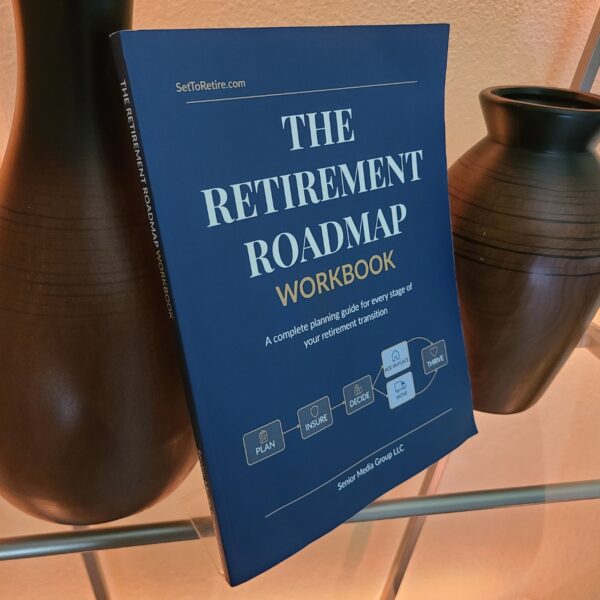
Track Every Document as You Check It Off
The Documents You Need worksheet in the Retirement Roadmap Workbook lays out all 16 essential documents, including the five covered here, in a simple checklist. Mark what you have, what’s in progress, and where each one is stored, so nothing gets lost between now and your attorney appointment.
See the Workbook → $47 · 138 pages · softcover
Frequently Asked Questions
What are the four documents Suze Orman says you must have?
Suze Orman recommends a revocable living trust, a pour-over will, an advance directive (living will), and a durable power of attorney for finances. She covers this in her book The Ultimate Retirement Guide for 50+ (2020) and on her website at suzeorman.com. This lines up closely with the five documents covered in this guide. The main difference is that she treats the trust and will as a pair: the trust holds most assets, and the pour-over will catches anything that didn’t make it into the trust before death. She is especially clear that the durable power of attorney is the document that protects you while you’re still alive, not just after death.
What is the downside of putting your house in a trust?
The downsides are mostly administrative rather than financial. Refinancing may require temporarily retitling the home out of the trust. Some states have homestead exemption rules that require careful attention when a primary residence goes into a trust. Your attorney should verify this for your state. If the trust is revocable (the most common type), Medicaid look-back rules do not apply, and there is no asset protection from creditors. If the trust is irrevocable, Medicaid eligibility can be affected by transfers made within five years of applying. For most homeowners, the probate-avoidance benefit outweighs the administrative friction, but a local estate planning attorney can assess your specific situation.
What is the 5 by 5 rule in estate planning?
The 5 by 5 rule (or “5 or 5 power”) is a trust provision giving the beneficiary the right to withdraw each year the greater of $5,000 or 5 percent of the trust’s value. The thresholds come from Internal Revenue Code Section 2514(e) and Section 2041(b)(2), which set the limits on powers of appointment that don’t trigger gift or estate tax. It is a specific planning tool, not a standard feature of every trust. If your trust documents mention a “5 or 5 power,” your estate planning attorney can explain whether it makes sense for your situation.
What happens if I die without an estate plan?
Dying without a will, called dying “intestate,” means state law determines how your assets are distributed. That formula doesn’t account for your specific relationships, wishes, or family situation. The court appoints an administrator, the process is public, and distribution can take months. Perhaps more importantly, dying without a durable power of attorney or medical POA means your family may have needed court intervention long before your death if you ever became incapacitated. The incapacity documents are often more urgent than the will itself.
Continue Reading: Estate Planning Guides
- Estate Planning Checklist for Seniors: 7 Essential Steps
- How to Find an Estate Planning Attorney You Can Trust: 8 Essential Questions to Ask
- 4 Types of Power of Attorney: The Critical Mistake to Avoid
- What Is a Living Trust? 7 Critical Facts Before You Decide
- Will vs Living Trust: 6 Critical Questions Before You Decide
- Revocable vs Irrevocable Trust: 6 Critical Differences
Content on SetToRetire.com is researched and drafted with AI assistance, then reviewed and edited for accuracy by the editorial team at Senior Media Group LLC. It is provided for general informational purposes only and does not constitute medical, legal, or financial advice. Consult a qualified attorney before making decisions. For more on how we create content, see our Editorial Process.