

Downsizing for seniors is one of the most significant transitions you’ll make in retirement, and most families wait far longer than they should to get started. This complete step-by-step guide covers every stage: from the decision to move, through sorting and clearing, all the way to settling into your new space on day one.
Find Local Senior Movers → Find Downsizing Help Near You →Free Download: Printable Room-by-Room Downsizing Checklist
Not sure where to start? Enter your email and we’ll send the printable checklist to your inbox instantly.
Last updated: September 2026
What Downsizing for Seniors Really Involves
Downsizing for seniors isn’t just moving to a smaller space. It’s a process of intentionally right-sizing your life for what comes next. For most families, it means transitioning out of a home lived in for decades, sorting through a lifetime of accumulated belongings, and making thoughtful decisions about what moves forward with you.
Done well, downsizing creates freedom: less maintenance, lower costs, a living situation better suited to your current and future needs. Done without a plan, it becomes overwhelming quickly. The families who do this well all share one thing in common: they planned ahead and they didn’t try to do it all themselves. The difference almost always comes down to preparation and the right support.
This guide to downsizing for seniors covers all of it: when to start, how to sort, who to hire, and how to make move-in day feel manageable rather than chaotic.
When Should You Start the Downsizing Process?
The most common mistake families make is waiting too long. Most people begin thinking seriously about downsizing 6 to 12 months after they should have. When downsizing happens under pressure (after a health event, a fall, or a sudden change in circumstances), rushed decisions get made, belongings get disposed of carelessly, and families lose options that don’t come back.
Starting while you have time, energy, and full decision-making capacity produces far better outcomes. Here are the signals that it’s time to begin:
- The home requires more maintenance than you can comfortably manage
- You’re using only a fraction of the available space on a regular basis
- Stairs, yard work, or home upkeep have become physically challenging
- The cost of maintaining the home is straining your retirement budget
- You find yourself isolated or far from family, medical care, or community
- A health change has made independent living in the current home more difficult
- You’ve been thinking about it for more than a year but haven’t started
Downsizing for Seniors: 7 Steps to a Successful Move
A well-managed senior downsizing project typically unfolds in seven stages. The timeline varies. Some families work through this over six months; others take two years. Either way, the stages are consistent regardless of pace. Skipping or rushing any of them is where most people run into trouble.
1 Decide Where You’re Going
Before a single item gets sorted, the destination needs to be determined (at least in general terms). Whether you’re moving to a smaller home, an independent living community, an assisted living facility, or a family member’s property, the destination determines how much space you’ll have and what you’ll need. Trying to downsize without a destination is like packing for a trip without knowing the weather. Everything you decide in the following steps depends on this one.
Not sure which senior housing option is right for your situation? Our Senior Living Options guide breaks down independent living, assisted living, memory care, and more with clear comparisons and cost data.
2 Build Your Team
Downsizing for seniors doesn’t have to be a solo project, and for most families, it shouldn’t be. The right team makes the difference between a process that takes months of painful weekends and one that gets done. Here’s who belongs on it:
✓A senior move manager or downsizing specialist: helps with sorting, decision-making, and coordinating the move. This is the single most valuable person you can hire.
✓An SRES® REALTOR®: a real estate agent with specialized training in senior home sales. Read our guide on what a Seniors Real Estate Specialist® (SRES®) does and why you need one.
✓A senior moving company: trained specifically for senior relocations, not just a standard residential move.
✓An estate sale company or estate liquidator: handles selling the items you won’t be taking with you.
✓A junk removal service: handles whatever can’t be donated or sold.
You don’t have to hire all of these at once. But knowing who does what before you start prevents the situation where a room full of belongings sits untouched for weeks because nobody knows whose job it is.
3 Inventory What You Have
Before sorting begins, do a complete walkthrough of the home and make a rough inventory by room. This doesn’t need to be exhaustive, just enough to understand the scale of what you’re dealing with. Pay particular attention to:
- Large furniture pieces (what fits in the new space and what doesn’t)
- Items with significant financial value: art, jewelry, collectibles, antiques
- Items with significant sentimental value: family heirlooms, photos, keepsakes
- Practical necessities: kitchen items, clothing, documents, medications
4 Sort Everything Into Four Categories
The sorting stage is the heart of the process and the most time-consuming part. Every item in the home should be assigned to one of four categories. Getting this clear upfront prevents the decision fatigue that stalls most downsizing projects midway through:
| Category | What It Means | How to Handle It |
|---|---|---|
| Keep | Items going to the new home | Only keep what fits the new space and serves your life going forward |
| Give | Items for family members | Have the conversation with family before sorting to reduce surprises |
| Sell / Donate | Items with value to others | Estate sale, online marketplace, or donation to charity |
| Dispose | Items no one wants | Junk removal service or scheduled disposal |
Work room by room rather than jumping around the house. Starting with the spaces that carry the least emotional weight builds momentum before tackling the rooms that mean the most to you.
5 Plan the New Space
Before moving day, create a simple floor plan of the new home and decide where each piece of furniture will go. Measure everything. The number one regret in senior moves is discovering that a beloved piece of furniture doesn’t fit after it’s already been transported. A senior move manager can help create this layout and ensure move-in day runs smoothly. This one step prevents the most common (and most avoidable) stressor in the whole process.
6 Clear the Remaining Belongings
Once the “Keep” items are identified, everything else needs to move out of the home, ideally before moving day so you’re not managing two processes at once. Coordinate your estate sale, donation pickups, and junk removal services in sequence: sale first, donations second, junk removal last for anything remaining. Trying to do all three simultaneously is how things get lost and timelines collapse.
7 Execute the Move and Settle In
With a good senior moving company, move-in day should feel manageable rather than chaotic. The best senior movers don’t just unload boxes. They unpack, arrange furniture, hang pictures, and set up the new space so it feels like home on day one. There is a version of this process that ends with you sitting in your new living room, surrounded by the things you love, in a space that feels right, without a box in sight. That version is real, and it’s what the right team makes possible.
For a detailed guide to finding the right company, read our post on how to find senior moving companies and what sets them apart.
Room-by-Room Downsizing: Where to Start
Every room presents its own sorting challenges. The general rule: start with the spaces that carry the least emotional weight, and save the rooms that carry the most for last. That sequencing builds momentum instead of stalling you out on day one. For the complete printable checklist broken down room by room, see our dedicated guide: Downsizing Tips for Seniors.
What to Do With Everything That Isn’t Coming With You
One of the biggest sticking points in downsizing for seniors is figuring out what to do with items that won’t be making the move. Most things fall into one of three paths: sell it, donate it, or have it hauled away. For the full list of marketplaces, organizations, and services for each path, see our dedicated guide: Downsizing Tips for Seniors.
Still have items that need sorting or hauling? Downsizing specialists help you handle the things that can’t be donated or sold. These professionals specialize in senior transitions and work at your pace.
Find Downsizing Specialists Near You →Realistic Downsizing Timelines
One of the most common sources of stress is underestimating how long the process takes. How long it takes you depends heavily on home size and how much professional help you bring in. Here’s how the major scenarios generally compare:
| Situation | Relative Pace | Notes |
|---|---|---|
| Small home or apartment, minimal belongings | The fastest of these scenarios | Manageable with family help and a standard moving company |
| Mid-size home, 20+ years of belongings | A longer process, best planned in stages | Benefits significantly from a downsizing specialist |
| Large home, 30+ years of belongings | The most involved of these scenarios | Estate sale plus professional senior mover strongly recommended |
| Moving under pressure (health event, urgent timeline) | Compressed, and demanding on you and your team | Requires a full professional team: senior mover, downsizing specialist, junk removal |
A 12-Month Plan You Can Write In
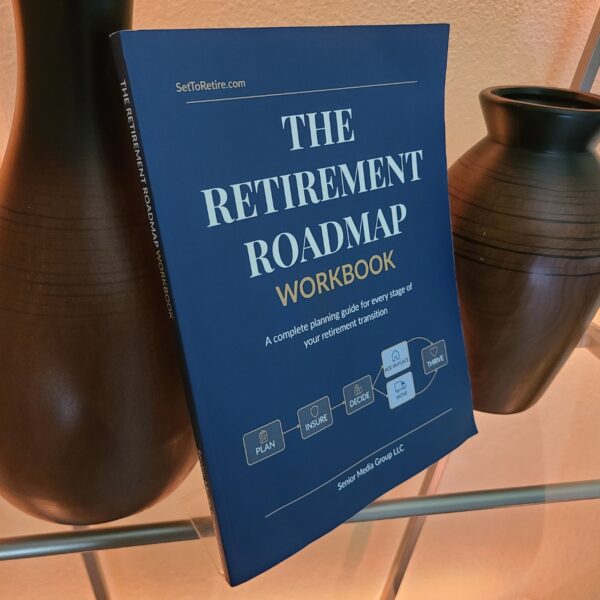
The workbook turns this timeline into a worksheet you can write in. Step 4B (Move) includes a 12-month backwards planning calendar anchored to your actual move date, plus room-by-room sorting trackers, a moving company vetting worksheet, and a new home evaluation guide.
See the Workbook → $47 · 138 pages · softcover
Downsizing and Estate Planning Go Hand in Hand
The downsizing process inevitably surfaces questions about who inherits what. In many cases, it’s the first time a family has directly confronted estate planning decisions. If you don’t yet have a current will, trust, and power of attorney in place, the downsizing process is an ideal time to address it. The conversations you’re already having about belongings make the legal conversations easier, not harder.
Our Estate Planning for Seniors guide covers everything you need: wills, trusts, powers of attorney, and healthcare directives, along with how to find a qualified estate planning attorney near you.
Downsizing for Seniors: Key Takeaways
- Start earlier than you think you need to. Time is your most valuable asset in this process.
- Decide on your destination before you begin sorting. Everything else depends on knowing where you’re going.
- Build a team: SRES® REALTOR®, senior mover, downsizing specialist, estate sale company.
- Sort everything into four categories: Keep, Give, Sell/Donate, Dispose.
- Start with low-emotion rooms to build momentum before tackling harder spaces.
- Measure the new space before moving day. Furniture surprises on move-in day are avoidable.
- Allow extra time and patience. This is an emotional process, not just a logistical one.
Frequently Asked Questions About Downsizing for Seniors
What not to do when downsizing?
The most common mistakes: starting without a destination in mind, beginning with high-emotion rooms (which stalls the process immediately), trying to do everything yourself without professional help, underestimating how long it will take, and making rushed decisions about sentimental items under time pressure. The last one is the hardest to undo. If you’re unsure about an item with deep personal meaning, box it and revisit it in 30 days. Don’t dispose of anything irreplaceable under pressure.
Should I sell my house before or after I downsize?
In most cases, it’s best to identify your destination and begin downsizing before listing the home. A sorted, decluttered home shows better, photographs better, and often sells faster and at a higher price. Your SRES® REALTOR® can advise on the local market and the best sequence for your specific situation. Timing these two processes correctly can significantly reduce stress.
Downsizing & Moving: All Guides
Content on SetToRetire.com is researched and drafted with AI assistance, then reviewed and edited for accuracy by the editorial team at Senior Media Group LLC. It is provided for general informational purposes only and does not constitute medical, legal, or financial advice. Consult qualified professionals before making decisions. For more on how we create content, see our Editorial Process.