
Certified Aging-in-Place Specialist (CAPS)
If you’re planning to stay in your home as you age, not just any contractor will do. A Certified Aging-in-Place Specialist is trained for exactly this kind of work. Here’s what that means, what it costs, and how to find one.
Last updated: June 2026
What Is a Certified Aging-in-Place Specialist?
A Certified Aging-in-Place Specialist, also known by the abbreviation CAPS, is a building professional who has completed a formal training program developed by the National Association of Home Builders (NAHB) in partnership with AARP. The program covers the technical side of home modification, plus business and customer service training specific to working with older adults and people with disabilities.
According to a 2024 AARP survey, 75% of adults 50 and older want to stay in their homes as they age. The challenge is that most homes were not built with that goal in mind. This credential bridges that gap. For a broader look at what aging in place involves, see our guide to aging in place. This article focuses specifically on the professional you need when it’s time to make your home work for the long term.
Anyone who completes the three required NAHB courses and applies for the credential can earn CAPS status. That includes contractors and remodelers, but also occupational therapists, interior designers, and healthcare professionals. The distinction matters when you’re hiring: if you want someone to design and manage actual construction work, look for a CAPS-certified contractor or remodeler specifically.
5 Critical Facts About the CAPS Credential
- CAPS is a formal credential from NAHB, developed in partnership with AARP. It is not a generic job title any contractor can claim
- A CAPS contractor walks your whole home and looks at safety, access, and mobility as a system
- Modifications follow Universal Design principles: changes that function well and look intentional, not medical
- Initial home safety assessments typically run $300 to $1,000; hourly consultation rates are $75 to $200
- You can search for a credentialed professional through the NAHB directory by state and city
What Does a Certified Aging-in-Place Specialist Actually Do?
The starting point is almost always a home safety assessment. A Certified Aging-in-Place Specialist walks through your home and looks at the space the way a contractor and a physical therapist might together. They’re looking for trip hazards, lighting gaps, surfaces that are hard to grab, thresholds that are easy to miss, and doorways that may be too narrow for a walker or wheelchair.
From that walk-through, they build a specific set of recommendations for your home and your situation. Not a generic checklist, but a plan that reflects how you move through the space and what your needs may look like in the years ahead. If you have a condition that affects your balance or mobility, a CAPS-trained professional factors that into what they suggest.
After the assessment, the modification work begins. This is where the contractor side of the credential comes in. A CAPS-certified remodeler can manage the actual construction: installing grab bars, widening doorways, building ramps, converting a tub to a walk-in shower, improving lighting at stairs, or adding a stairlift. They coordinate with other tradespeople when a project calls for it and see the work through from design to completion.
The goal throughout is Universal Design. That means changes that make the home more accessible without looking institutional. Grab bars that match the bathroom fixtures. Thresholds that are flush with the floor. Lighting that feels intentional. A good CAPS contractor makes changes that improve your home instead of announcing that something has changed.
CAPS vs. a Regular Contractor: Why It Matters
Any licensed contractor can install a grab bar. The difference is that a CAPS-certified contractor knows where to put it, how to anchor it to studs so it holds weight reliably under real-world conditions, whether the placement works for the way you actually move, and whether that grab bar needs to be paired with a fold-down bench and a handheld showerhead to fully solve the problem.
That distinction is more important than it sounds. Falls are one of the most serious risks people face as they get older. According to the CDC, more than one in four adults 65 and older falls each year, and about 3 million of those falls result in an emergency department visit. A modification that’s installed incorrectly, or that only addresses part of the problem, does not reduce that risk.
A regular contractor might focus on a single project. A CAPS contractor thinks about the whole house. They consider the path from the bedroom to the bathroom at 2 a.m. They think about what happens if your balance or vision changes in three years.
They plan modifications that anticipate those changes instead of just responding to where things stand today.
Most people schedule a CAPS assessment after a fall or a health scare. By that point, they’re already in recovery mode. Getting an assessment before something goes wrong is less disruptive, less rushed, and almost always less expensive than addressing it under pressure.
What Does It Cost to Work with a CAPS Contractor?
Costs break into two parts: the assessment and the modification work itself. For the initial home safety assessment, expect to pay somewhere between $300 and $1,000, depending on the specialist’s experience and your location, according to Aging in Place Directory. Hourly consultation rates typically run $75 to $200 per hour.
The modification work is priced separately and varies widely depending on what your home needs. Common projects and their typical ranges from the same source:
| Modification | Typical Cost Range |
|---|---|
| Grab bars (installed) | $100–$300 |
| Wheelchair ramp | $1,500–$5,000 |
| Stairlift | $3,000–$5,000 |
| Walk-in tub | $5,000–$15,000 |
Major renovations like an accessible bathroom remodel or a kitchen update can run significantly higher depending on the scope. Our guide to home modifications for aging in place breaks down typical costs for every room. The assessment is always the right starting point. It tells you exactly what your home needs before you spend anything on construction, and it prevents you from doing modifications twice because the first round wasn’t planned well.
Financial assistance is worth looking into before you write off the cost. Medicaid waiver programs cover home modifications for people who qualify. The VA offers grants for eligible veterans. Many Area Agencies on Aging connect homeowners with local programs that provide free or reduced-cost modifications for income-qualifying households.
Ask your CAPS contractor early whether they have experience helping clients find these programs. Many do, and it can meaningfully reduce what you pay out of pocket.
Bring Real Questions to the Assessment
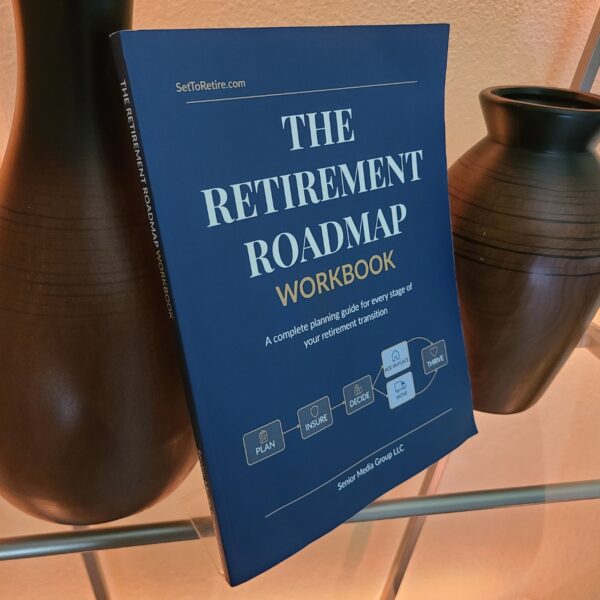
The Retirement Roadmap Workbook includes a Contractor Tracking Log for comparing bids side by side, plus a full page of questions to ask a CAPS contractor, with room to write down what they tell you.
See the Workbook → $47 · 138 pages · softcover
How to Find a Certified Aging-in-Place Specialist Near You
The most reliable starting point is the NAHB CAPS directory, which lists active designees you can filter by state and city. This matters because it confirms the credential is current, not just something a contractor mentions on their website. A Certified Aging-in-Place Specialist who has kept their designation current has completed the required continuing education.
When you contact a candidate, ask them to share their CAPS credential number and confirm when it was last renewed. Someone who earned the designation years ago and has not maintained it is not current. This is a quick question that separates professionals who take the credential seriously from those who treat it as a one-time marketing credential.
You can also search local remodeling companies directly and ask whether their staff hold CAPS certification. Some companies have multiple CAPS-certified team members. Others may not list it prominently but have it. A direct phone call is often faster than website searches for this.
The MovingToSeniorLiving.com directory is another option. It lists home modification contractors in your area who work specifically with people planning to stay in their homes as they get older. You can search by location and connect directly with a professional near you.
Picture what your home looks like a year from now, after this work is done. The bathroom feels completely normal, just safer. There’s nothing institutional about any of it. You move through your home the same way you always have, but with less worry.
That outcome is what working with the right professional makes possible. You don’t have to figure out which modifications your home needs on your own. There are people who do exactly this work every day.
Frequently Asked Questions
What questions should I ask a CAPS contractor before hiring?
Ask them to confirm their CAPS credential is current and share their credential number. Ask for references from clients with similar projects, and confirm they carry general liability insurance. Ask how they handle permits and whether they coordinate subcontractors directly. A contractor who answers these questions clearly and without hesitation is worth your time.
Is a Certified Aging-in-Place Specialist the same as an occupational therapist?
Not necessarily. Occupational therapists can earn CAPS certification, but most CAPS designees are contractors and remodelers. An occupational therapist with CAPS training typically focuses on assessment and recommendations. A CAPS-certified contractor focuses on the physical modification work. If you need someone to actually build the changes, look specifically for a contractor or remodeler with the CAPS designation.
Does Medicare cover a CAPS assessment or home modification costs?
Standard Medicare does not cover home modifications or CAPS assessments. Some Medicare Advantage plans include a home safety benefit, so check your specific plan. Medicaid may cover modifications for qualifying individuals. The VA offers home modification grants for eligible veterans. Your local Area Agency on Aging can point you toward community programs that help with modification costs regardless of income level.
Does a CAPS contractor work with occupational therapists or other healthcare professionals?
Some do, and the collaboration can be valuable. An occupational therapist evaluates how a person moves and what their functional limitations are. A CAPS contractor translates those findings into specific modifications. If you’re working with an OT through a hospital discharge program or home health agency, ask whether they can recommend a CAPS contractor they’ve collaborated with before.
Can a CAPS contractor pull permits and manage the whole project?
Yes. CAPS-certified contractors and remodelers hold standard contractor licenses and can pull permits, manage subcontractors, and see a project through from start to finish. The CAPS designation adds expertise in aging-in-place design and modification on top of their existing license. When hiring, confirm both that the person holds current CAPS certification and that they hold an active contractor’s license in your state.
Free Download: Aging-in-Place Home Safety Checklist
Not sure where to start? Enter your email and we’ll send you this room-by-room checklist so you can spot what your home needs and fix it on your own timeline.
Continue Reading: Aging in Place Guides
Content on SetToRetire.com is researched and drafted with AI assistance, then reviewed and edited for accuracy by the editorial team at Senior Media Group LLC. It is provided for general informational purposes only and does not constitute medical, legal, or financial advice. Consult qualified professionals before making decisions. For more on how we create content, see our Editorial Process.