Once you turn 73, the IRS requires you to start withdrawing money from your retirement accounts each year. Miss a deadline and you’ll owe a 25% penalty on whatever you should have taken out.
Find a Financial Planner Near You →Last updated: September 2026
What Are Required Minimum Distribution Rules?
Required minimum distribution rules are IRS regulations that force you to start withdrawing a minimum amount from your pre-tax retirement accounts once you reach a certain age. The IRS gave you a tax break when you put that money in. Now it wants its cut. Most people understand the basic idea but get tripped up on the timing, the math, or the exceptions. That’s where the expensive mistakes happen.
This article covers the full picture: what age RMDs start, which accounts are affected, how to calculate your amount, the deadlines, the penalty for getting it wrong, and the seven most costly mistakes. For a broader look at retirement finances, see our financial planning for retirement guide.
The amount you must withdraw changes every year. It’s recalculated based on your December 31 account balance and a life expectancy factor from the IRS Uniform Lifetime Table. The full official rules are on the IRS required minimum distributions FAQ page.
Required Minimum Distribution Rules at a Glance
- RMDs start at age 73 if you were born between 1951 and 1959
- Born 1960 or later? Your RMD age will be 75 (effective 2033)
- First RMD deadline: April 1 of the year after you reach your RMD age
- All subsequent RMDs: December 31 of each year
- Penalty for missing: 25% of the amount you should have withdrawn
- Applies to traditional IRAs, 401(k)s, 403(b)s, and most pre-tax accounts
- Does not apply to Roth IRAs (original owner) or Roth 401(k)s as of 2024
What Age Do RMDs Start?
Your RMD starting age depends on when you were born. The SECURE Act 2.0, passed in December 2022, raised the age from 72 to 73 and eventually to 75 for later birth years.
| Birth Year | RMD Starting Age | First RMD Deadline |
|---|---|---|
| 1950 or earlier | 72 (pre-SECURE 2.0) | Already required |
| 1951–1959 | 73 | April 1 of the year after you turn 73 |
| 1960 or later | 75 | April 1 of the year after you turn 75 (effective 2033) |
If you were born in 1953, for example, you’re turning 73 in 2026. Your first RMD is due by April 1, 2027, or by December 31, 2026 if you want to avoid a double-RMD situation the following year. More on that in the deadlines section below.
The age 75 rule for those born in 1960 or later doesn’t take effect until 2033. For anyone turning 73 between now and then, age 73 is still the starting point under current required minimum distribution rules.
Which Accounts Require RMDs?
RMDs apply to most pre-tax retirement accounts. They do not apply to Roth IRAs while the original owner is alive. That exemption comes with some nuances worth knowing.
Accounts that require annual RMDs:
- Traditional IRAs
- SEP-IRAs and SIMPLE IRAs
- Traditional 401(k) plans
- 403(b) plans (traditional)
- 457(b) government plans
- Most other employer-sponsored defined contribution plans
Accounts exempt from RMDs during the original owner’s lifetime:
- Roth IRAs (under current law, the original owner is not required to take RMDs during their lifetime)
- Roth 401(k) and Roth 403(b) accounts (as of January 1, 2024, SECURE Act 2.0 removed the RMD requirement for these accounts)
One important note: if you inherited any of these accounts, the required minimum distribution rules for inherited accounts are completely different. We cover those in detail in our guide to inherited IRA RMD rules.
How Is Your RMD Calculated?
Following required minimum distribution rules, your RMD equals your prior December 31 account balance divided by a life expectancy factor from the IRS Uniform Lifetime Table. The IRS updated this table in 2022, using longer life expectancy estimates that reduced RMD amounts slightly across all ages.
The formula: Prior year-end balance ÷ IRS life expectancy factor = Your RMD
At age 73, the factor is 26.5. If your traditional IRA had a balance of $500,000 on December 31 of last year, your RMD this year is roughly $18,868 ($500,000 ÷ 26.5). The factor decreases as you age, so your required withdrawal grows as a percentage of your balance each year.
The full table is in IRS Publication 590-B. Most major brokerages will calculate your RMD for you and send a notice each year.
Enter your age and your prior December 31 account balance for a rough estimate. This uses the IRS Uniform Lifetime Table (Table III) and assumes your spouse is within 10 years of your age or is not the sole beneficiary. If your spouse is the sole beneficiary and more than 10 years younger, a different table applies and your actual RMD will be lower.
This is an estimate only. Consult your financial advisor for your actual RMD amount. The IRS Uniform Lifetime Table factors used: age 73 = 26.5, age 74 = 25.5, age 75 = 24.6, age 76 = 23.7, and so on.
401(k) plans work differently. If you have two old 401(k)s, each one has to take its own withdrawal. Under current IRS rules, money from one account does not count toward the other’s requirement.
How you distribute withdrawals across accounts can have tax implications worth discussing with your CPA or financial planner before you decide.
RMD Deadlines and the Double RMD Trap
Your first RMD is due by April 1 of the year after you reach your RMD age. Every RMD after the first is due by December 31 of that calendar year.
That April 1 extension sounds flexible. For many people, it becomes a trap.
Here is what happens: you turn 73 in 2026. Your first RMD is technically due by April 1, 2027. But your second RMD, covering the 2027 tax year, is also due by December 31, 2027. Wait until April and you end up taking two full RMDs in the same calendar year. Both count as ordinary income in 2027. Depending on your other sources of income, that can push you into a higher tax bracket, trigger the Medicare IRMAA surcharge on your Part B and Part D premiums two years later, and significantly increase your total tax bill for the year.
Some people choose to take their first RMD before December 31 to keep the income split across two separate tax years. Others use the April extension for cash flow reasons. Which approach makes sense depends on your income, your bracket, and what else is happening in your tax picture that year.
Not Sure How Your RMD Fits Your Bigger Picture?
Calculating your RMD is the easy part. Coordinating it with your other income, your tax bracket, and your other accounts is where it gets complicated. A financial planner can map it out with you and help you avoid a costly mistake. Find one near you on MovingToSeniorLiving.com.
Find a Financial Planner Near You →The Penalty for Missing Your RMD
Miss your RMD deadline and the IRS charges a 25% excise tax on the amount you failed to withdraw. That’s one of the steepest penalties in the tax code. If your RMD was $20,000 and you skipped it, you owe a $5,000 penalty on top of the income taxes you’ll pay when you eventually take the distribution.
The penalty can drop to 10% if you act quickly. The IRS allows a two-year correction window, which it calls a “corrective action” period. It involves taking the missed distribution and filing Form 5329 with an explanation. A tax professional can help you through the process and improve your chances of qualifying for the reduced rate.
If you discover a missed RMD, acting within the two-year correction window gives you the best chance at the reduced 10% rate. Doing nothing makes the situation worse. A tax professional can walk you through the Form 5329 filing and help you document the correction properly.
Special Situations Worth Knowing
Three situations come up more than any others: still working at RMD age, owning multiple accounts, and inherited accounts.
Still working at age 73. If you are still employed and actively participating in your current employer’s 401(k) plan, you may be able to delay RMDs from that specific plan until April 1 of the year after you retire. This is called the “still-working exception.” Two conditions must be met: you must own less than 5% of the company, and the plan itself must allow the delay. Not every plan does.
This exception applies only to your current employer’s plan. Your traditional IRAs and any old 401(k)s from former employers still require RMDs starting at your regular RMD age. If you have an IRA and a current employer’s 401(k), the IRA does not get to use the still-working exception. Kiplinger’s guide to the new RMD rules covers this exception in more detail.
Multiple IRA accounts. Figure out the RMD for each account, add them up, and pull the total from whichever IRA you want. The IRS only cares that the total comes out, not which account it comes from. How you distribute withdrawals across accounts can have tax implications worth discussing with your CPA or financial planner.
Multiple 401(k) accounts. No aggregation is allowed. Each 401(k) must satisfy its own RMD independently. If you have one former employer’s 401(k) with a $5,000 RMD and another with a $3,000 RMD, you must take $5,000 from the first and $3,000 from the second. Taking $8,000 from just one does not satisfy both. Missing the RMD from even one account triggers the full 25% penalty on that account’s shortfall.
The 7 Biggest Required Minimum Distribution Mistakes
Most required minimum distribution mistakes come down to timing errors, math errors, or assuming the wrong rules apply to the wrong account. Here are the seven that cost people the most.
1Using the April 1 extension in year one. Delaying your first RMD until April 1 sounds smart until you realize your second RMD is due that same calendar year. Two full RMDs hitting in one year can push you into a higher tax bracket and trigger an IRMAA surcharge on Medicare premiums two years later.
2Using the wrong account balance. Your RMD is calculated from your December 31 balance of the prior year. Using a current statement, a mid-year figure, or an estimate will give you the wrong number. Pull the exact year-end balance from your account statement.
3Applying IRA aggregation rules to your 401(k). With traditional IRAs, you can take the combined total from any one account. With 401(k) plans, each account must satisfy its own RMD separately. If you over-withdraw from one 401(k) and under-withdraw from another, the shortfall on the second account still triggers the penalty.
4Thinking the still-working exception covers your IRA. It doesn’t. If you are still employed and your current employer’s 401(k) plan allows you to delay RMDs, great. But your traditional IRAs still require withdrawals starting at your RMD age regardless of your employment status.
5Waiting too long after a missed RMD. The IRS allows a two-year correction window that can reduce the penalty from 25% to 10%. The longer you wait, the less flexibility you have. A tax professional can help you work through the correction process before that window closes.
6Forgetting about older or smaller accounts. That 401(k) from a job you left 15 years ago is still subject to required minimum distribution rules. Accounts you haven’t actively managed in years don’t get a pass, and your brokerage won’t always remind you if the account is sitting at a firm you rarely check.
7Assuming inherited accounts follow the same rules. They don’t. If you inherited an IRA or employer plan, entirely different rules apply based on your relationship to the original account owner. See our guide to inherited IRA RMD rules for the full breakdown.
Keep Every Account in One Place
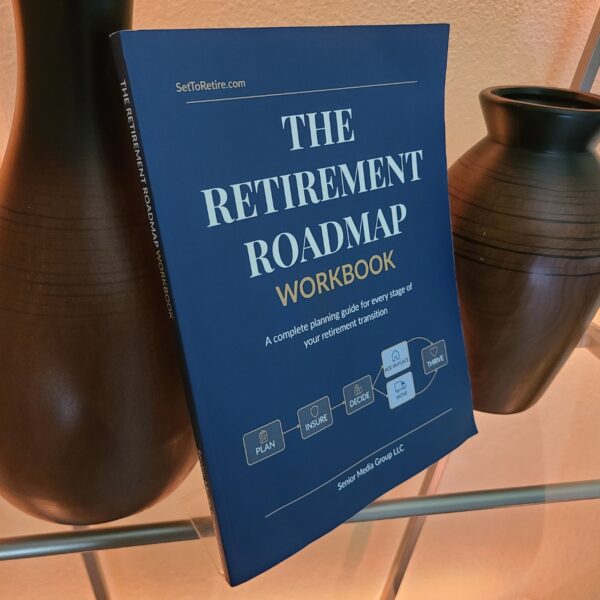
The Retirement Roadmap Workbook includes a full financial inventory worksheet with space to log every retirement account you own, so your RMDs aren’t tracked from memory or a scattered stack of statements.
See the Workbook → $47 · 138 pages · softcover
What Are the New RMD Rules for 2026?
No major legislation changed required minimum distribution rules specifically for 2026. But if you are turning 73 this year, these are the rules applying to you for the first time.
Under SECURE Act 2.0, anyone born between 1951 and 1959 has an RMD starting age of 73. If you were born in 1953, you turn 73 in 2026. Your first RMD is due by April 1, 2027, or by December 31, 2026 if you want to avoid stacking two RMDs in 2027. If you were born in 1952, you should already be taking RMDs and 2026 is simply your fourth year. Kiplinger’s coverage of SECURE Act 2.0 RMD changes has a clear timeline if you want to confirm where your birth year falls.
For those born in 1960 or later, the RMD starting age will be 75. That doesn’t take effect until 2033. Nothing changes for this group in 2026 or for the next several years.
One change worth knowing that did take effect in 2024: Roth 401(k) and Roth 403(b) accounts are no longer subject to RMDs during the original owner’s lifetime under current rules. If you have a Roth 401(k) from a current or former employer, you are not required to take distributions from it during your lifetime. This brought Roth 401(k)s in line with how Roth IRAs work under current tax law.
Another change worth knowing: the amount you can put into a Qualifying Longevity Annuity Contract, or QLAC, went up. Before 2024, the limit was the smaller of $145,000 or 25% of your account balance. Under current rules, that 25% test is gone. You can now put up to $210,000 into a QLAC, the same limit that applied in 2025, according to the IRS. A QLAC lets you delay a portion of your RMDs, sometimes until age 85, in exchange for guaranteed income later in life. Whether that trade fits your accounts is worth a conversation with a financial advisor.
Frequently Asked Questions
Can I take more than my required minimum distribution in a given year?
Yes. The RMD is a floor, not a ceiling. You can withdraw more than the minimum in any given year. Taking extra reduces your account balance, which will lower future RMD amounts slightly. But it does not allow you to skip or reduce the following year’s required amount. The RMD calculation resets every year based on the new December 31 balance, regardless of how much you withdrew the year before.
Are required minimum distributions taxed as income?
Yes. RMDs from traditional IRAs and pre-tax 401(k) accounts are taxed as ordinary income in the year you take them. They are added to your wages, Social Security, and other income for the year and taxed at your marginal rate. This is why the timing of your first RMD matters: two RMDs in one calendar year can push a significant amount of income into a higher bracket. Roth accounts are treated differently: withdrawals from a Roth IRA are generally tax-free.
Can I reinvest the money from my RMD?
Yes, with one limitation. Under current tax law, you are not able to roll an RMD back into a tax-advantaged account like an IRA or 401(k). But you can deposit the after-tax proceeds into a regular taxable brokerage account, a savings account, or spend it however you like. Some people direct their RMD to a Qualified Charitable Distribution, which can reduce your taxable income if structured correctly. That strategy is worth discussing with a financial advisor.
What if my spouse is the sole beneficiary and more than 10 years younger than me?
In that case, you use the IRS Joint Life and Last Survivor Expectancy Table (Table II in Publication 590-B) instead of the standard Uniform Lifetime Table. The joint table uses a longer combined life expectancy, which produces a lower required minimum each year. This is one of the few situations where your personal circumstances can meaningfully reduce your annual withdrawal obligation.
Can I use a Qualified Charitable Distribution to satisfy my RMD?
Yes, if you are 70½ or older. A Qualified Charitable Distribution lets you transfer up to $111,000 (the 2026 limit, indexed for inflation) directly from your IRA to a qualifying charity. That transfer counts toward your RMD for the year, and because the money goes directly to the charity rather than to you, it is excluded from your taxable income. The transfer must go directly from the IRA custodian to the organization. A financial advisor can walk you through the eligibility requirements and help you determine whether this strategy makes sense for your situation.
Continue Reading
Content on SetToRetire.com is researched and drafted with AI assistance, then reviewed and edited for accuracy by the editorial team at Senior Media Group LLC. It is provided for general informational purposes only and does not constitute medical, legal, or financial advice. Consult a qualified financial or tax professional before making decisions. For more on how we create content, see our Editorial Process.