If you live an hour or more from an aging parent, you know a specific kind of worry that doesn’t fully go away. Long distance caregiving is one of the most common situations families navigate today, and most people do it without a real plan in place. This guide gives you a practical framework for coordinating care, staying informed, and protecting your own health along the way.
Last updated: May 2026
What Is Long Distance Caregiving?
Long distance caregiving is when you provide support, oversight, or coordination for an aging or ill family member from a significant distance. The National Institute on Aging defines it as living an hour or more away, though most families feel the weight of it long before the drive gets that long. You’re making decisions, managing logistics, and carrying emotional responsibility for someone who isn’t right there with you.
About 7 million Americans are currently long distance caregivers, and that number keeps growing as adult children relocate for work while aging parents choose to stay in homes they’ve lived in for decades. If this is your situation, you are not alone, and there are practical approaches that genuinely make it more manageable. Our guide to caring for elderly parents covers the full range of caregiving situations, from early warning signs to full-time care decisions, if you want the wider picture alongside this one.
What You’ll Find in This Guide
- The 7 strategies that reduce chaos and replace worry with real information
- What legal documents to have in place before a health crisis hits
- How technology fills gaps when you cannot be there in person
- The warning signs that mean your parent needs more consistent local support
- How to find in-home care professionals in your parent’s area
The Biggest Challenges of Long Distance Caregiving
There’s a specific kind of helplessness that comes with being far away. You hear something concerning on a call, or a neighbor mentions something offhand, and you can’t just go over there to see for yourself. You have to triage from a distance, make judgment calls with incomplete information, and then get back to your regular life carrying the weight of not really knowing.
The most common challenges families describe:
Not knowing what’s actually happening day to day. A phone call gives you a snapshot. It doesn’t show you that the refrigerator is empty, that the mail is piling up, or that your parent is having more trouble with the stairs than they’re letting on.
Being the only point of contact. Without a local support network, everything flows through you. Every pharmacy question, every neighbor concern, every doctor callback. That’s unsustainable over months and years.
Making decisions during a crisis with no system in place. Most people doing long distance caregiving find out they needed a plan when they’re already in the middle of an emergency. A parent falls on a Tuesday night. You get a call Wednesday morning. Suddenly you’re trying to figure out who their doctor is, whether there’s a health proxy on file, and whether anyone can be there until you arrive. That window between “I should set this up” and “I need this now” closes faster than most people expect.
Caregiver burnout. Long distance caregiving carries its own version of exhaustion. You may not be providing physical hands-on care, but the constant mental load of monitoring, coordinating, worrying, and feeling guilty about not being there adds up quickly. Burnout doesn’t require exhausted muscles. It just requires never getting to set the weight down.
7 Essential Strategies for Long Distance Caregiving
These aren’t abstract suggestions. They are the practical moves that actually reduce the chaos.
1. Build a central care file. One document, digital or printed, that has your parent’s doctors, medications, insurance cards, allergies, emergency contacts, and important account numbers. Anyone who needs to step in should be able to find this. You should be able to pull it up on your phone at 11pm when you’re on hold with a hospital admissions desk.
2. Recruit a local point person. A neighbor, a friend from their community, a nearby family member who can actually drive by and check in. This doesn’t need to be a large commitment. Even one weekly in-person visit from someone who sees your parent face-to-face gives you information that no phone call can match.
3. Create a communication rhythm. Scheduled calls are better than reactive ones. A standing Sunday evening call gives you a regular baseline rather than a string of crisis conversations. It also normalizes asking “how are things going” rather than only calling when something is wrong.
4. Get the legal documents in place now. A durable power of attorney, a healthcare proxy, and a HIPAA authorization at minimum. These need to be signed while your parent is healthy and legally competent to do so. This is the single most common thing families wish they had done before the moment they needed it.
5. Use technology to fill the gaps. Medication management apps, video calling, passive motion sensors, and medical alert devices can give you real information without requiring your parent to report everything themselves. The technology section below covers the specifics.
6. Write down an emergency protocol. Who gets called first? Who can be at the house within an hour? What hospital would your parent go to? Write this down and make sure your local point person has a copy. Nobody should be improvising the first time something goes wrong.
7. Protect your own capacity. Long distance caregiving has a way of expanding to fill every available hour and mental space if you let it. Decide in advance what you will handle directly and what you will delegate or outsource. Getting help isn’t giving up on your parent. It’s building a system that doesn’t collapse the next time something goes wrong.
Build Your Communication Plan on Paper
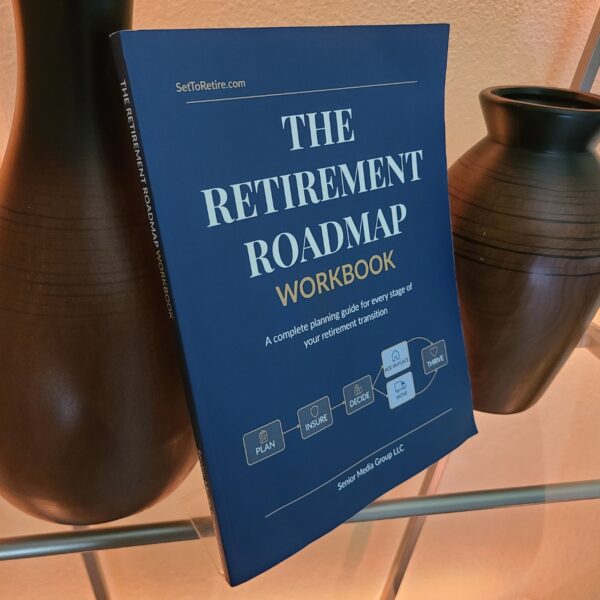
The workbook’s Step 5 (Thrive) section includes a long-distance caregiving communication plan: how often the family connects, who checks in, and the specific triggers that mean it’s time for an immediate call.
See the Workbook → $47 · 138 pages · softcover
Legal Documents to Get in Order Before a Crisis
This section deserves its own space because it’s the thing most families put off the longest, and the thing that causes the most unnecessary pain when it hasn’t been done. Good long distance caregiving requires having these on file before you need them.
Durable power of attorney. This gives you, or another trusted person, the legal authority to make financial and legal decisions on your parent’s behalf if they become unable to do so. Without it, you may need to go through a court guardianship process to handle something as basic as paying their bills or managing their accounts, even as their adult child.
Healthcare proxy or medical power of attorney. This designates who makes medical decisions if your parent can’t communicate their own wishes. Your parent’s doctor cannot legally discuss their care with you without this document or a signed HIPAA authorization on file. This is separate from a general POA and specifically covers healthcare decisions.
HIPAA authorization. A signed HIPAA release lets healthcare providers share information with you directly. Get it signed and make sure it’s on file with their primary care physician and any specialists they see regularly. Without it, you may be shut out of basic conversations about their health.
Advance directive or living will. This documents your parent’s wishes about end-of-life care, resuscitation, and life-sustaining treatment. It takes the pressure of those decisions off family members during the most stressful moments, and it’s an act of genuine care for everyone involved, including your parent.
Technology Tools That Make Long Distance Caregiving Manageable
You cannot be there every day. But the right tools give you a clearer, more consistent picture of how your parent is actually doing, and can flag problems before they become emergencies.
Medication management. Missed or incorrect medications are among the most common and most preventable problems for people living alone. Automated dispensers like Hero or Pria give the right medications at the right time and send an alert if a dose is skipped. Apps like Medisafe are simpler and free, sending reminders and copying a caregiver if a dose is missed.
Motion and wellness monitoring. Systems like Lively or Amazon’s Alexa Together can track whether your parent is moving around the home in their normal patterns. A day without usual activity is a signal worth following up on. These aren’t surveillance tools. They’re a way to get passive, real-world information rather than relying entirely on your parent to self-report.
Video calling. A regular video call gives you something a phone call can’t: you can see your parent’s face, their environment, and whether they look well. A tablet mounted in a fixed spot, on the kitchen counter for example, makes it easy for them to answer without navigating through apps or menus.
Medical alert systems. Devices with fall detection, from companies like Medical Guardian or using Apple Watch, let your parent call for help if they fall or have a medical event when no one is around. Many now work outside the home as well, not just within it.
When It’s Time to Bring In Professional Help
At some point, a combination of remote check-ins, technology, and family coordination isn’t enough. Knowing when you’ve reached that point is one of the harder calls in long distance caregiving.
Warning signs that more consistent local support is needed:
- Your parent has fallen more than once, or had a fall they didn’t mention right away
- They’re losing weight or the refrigerator is consistently empty when you visit
- Medications are being missed or taken incorrectly even with reminders in place
- Multiple doctor appointments have been skipped or a chronic condition is going unmanaged
- They’re increasingly isolated or showing signs of depression or confusion
- Neighbors or friends have reached out independently with concerns
- Your instinct says something is off, even if you cannot point to a single specific incident
In-home care is often the right next step. A professional caregiver can come a few hours a day or a few times a week to help with personal care, medication management, meals, and transportation to appointments. For many families, it’s what makes it possible for a parent to stay home safely for years longer than they could otherwise.
Here is what it looks like on your end when this is sorted out: there is someone who sees your parent twice a week and knows what normal looks like for them. You get a regular update. When something changes, there is a system to catch it. You are still the child who loves them. You are just no longer the only thing standing between them and a bad outcome.
You do not have to find the right person on your own. There are professionals who specialize in exactly this kind of support. They know how to assess what a parent needs, how to coordinate care consistently, and how to be there when you cannot be. MovingToSeniorLiving.com lists in-home healthcare providers in your parent’s area so you have somewhere to start.
Frequently Asked Questions
What is caretaker syndrome?
Caretaker syndrome, more commonly called caregiver burnout, is the physical and emotional exhaustion that builds in people who take on too much caregiving responsibility without enough support. Symptoms include chronic fatigue, resentment, depression, neglecting your own health, and a persistent feeling that you can never do enough. Long distance caregivers experience this too, even without providing physical hands-on care. The mental load of constant monitoring, coordinating, and worrying is its own kind of exhaustion. If this description sounds familiar, it is a signal to redistribute responsibility, not push harder.
How do I know when my parent needs more care than I can manage from a distance?
Watch for patterns rather than isolated incidents. One missed medication dose is not an emergency. Missed doses consistently over several weeks is a different situation. A single fall that heals fine is concerning but manageable. Two falls in three months means the situation has changed. Other patterns to track: unexplained weight loss, increasing isolation, declining personal hygiene, missed medical appointments, and neighbors or friends reaching out on their own. If your instinct says the current setup is not enough, that is worth listening to. An in-home care assessment is a low-commitment way to get a clear picture of what level of support is actually needed.
What are the most important legal documents for long distance caregiving?
The four documents every family needs in place are a durable power of attorney (for financial and legal decisions), a healthcare proxy or medical power of attorney (for medical decisions), a HIPAA authorization (so providers can share information with you), and an advance directive or living will (to document end-of-life wishes). All four should be signed while your parent is healthy and legally competent to do so. An estate planning attorney can prepare all four in a single appointment. Without them, your ability to help during a crisis is significantly limited regardless of how close you live.
Can I get paid to take care of my aging parent?
In some cases, yes. Several state Medicaid programs, VA benefits, and private long-term care insurance policies include provisions allowing family members to be compensated for caregiving. The rules vary significantly by state and by program. Our guide on family caregiver support programs covers the main pathways in detail, including which programs you may qualify for and how to apply.
What is the hardest part of long distance caregiving?
Most people say the hardest part is not any single task. It is the background anxiety of not knowing. Not knowing if your parent is okay today. Not knowing if that persistent cough from last month turned into something. Not knowing whether they would tell you if something was wrong. Building a reliable system, a local support person, a regular call schedule, some form of passive monitoring, does not eliminate that feeling entirely. But it replaces constant worry with actual information. That shift alone changes the experience significantly.
Free Download: Senior Living Transition Checklist
Not sure where to start with care planning? Enter your email and we’ll send this checklist straight to your inbox.
Continue Reading: Caregiver Resources
Content on SetToRetire.com is researched and drafted with AI assistance, then reviewed and edited for accuracy by the editorial team at Senior Media Group LLC. It is provided for general informational purposes only and does not constitute medical, legal, or financial advice. Consult qualified professionals before making decisions. For more on how we create content, see our Editorial Process.